

uctzt.over-blog.com/
18 Février 2021

Processors: All Mac models made in the past five years use fast Intel microprocessors, similar to those used in most PCs. Apple uses processors that feature two or more processor cores, allowing them to work faster. They all support 64-bit operation, allowing main memory greater than 4GB, though not all Mac models let you install so much memory.
When Apple introduced the Macintosh on Jan. 24, 1984, it wasn't the first computer to sport a graphical user interface (GUI) on top of its operating system (OS), but it was an early success in the consumer market. At the time, most consumer computers used text-based command lines. Computer owners had to learn numerous commands to navigate file systems and run applications. The Macintosh GUI seemed like a big leap ahead -- so much so that other companies began to invest in creating their own GUI OS.
A quick glimpse at today's Mac OS X reveals that the GUI is stronger than ever. But the current Mac operating system owes a lot to other computer projects, some of which weren't under Apple's leadership. Free music software for pc. To understand how OS X works, you have to know its history.
Advertisement
Advertisement
Shortly after the debut of the Macintosh there was a power struggle in the executive levels of leadership at Apple. Co-founder Steve Jobs found himself pushed to the edges of the company and eventually resigned. In 1988, Jobs went on to spearhead a project he called the NeXT Computer, which ran on an operating system called NEXTSTEP. Meanwhile, Apple continued to develop the Mac operating system.
Ultimately, NeXT received little traction in the computer market, though it was used in some high-profile applications. For example, World Wide Web founder Tim Berners Lee designed the first Web page using a NeXT computer [source: CERN]. And the executive power struggle at Apple continued as the company struggled to remain relevant. It was facing stiff competition with Microsoft's Windows OS. Apple executives considered purchasing or leasing an operating system from several different sources, including IBM. Ultimately, a phone call from Steve Jobs to Apple convinced the company to acquire NeXT in order to use its OS in Mac computers. This meant Steve Jobs was once again part of Apple.
Apple began to incorporate NeXT technology with the Mac OS. Apple also began to integrate features from a failed internal OS project codenamed Copland. In September 1997, Jobs became the interim CEO of Apple. A year later, he announced that Mac OS X -- the 10th generation of the Macintosh operating system -- would debut in 1999. On March 16 of that year, Jobs revealed the first build of Mac OS X to a group of developers. While the technical name for the operating system is Mac OS X 10.0, the company gave it the codename Cheetah. Since that first release, all OS X versions have a big-cat nickname. The most recent version as of the writing of this article is Mac OS X 10.7, also known as Lion.
Now that we've got some basic history out of the way, let's take a quick look at what operating systems actually do.
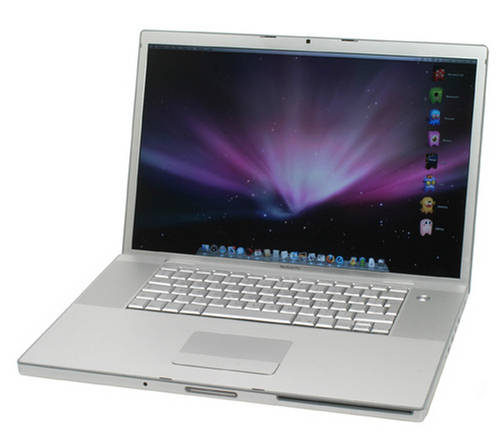
High Sierra is an update of MacOS which focuses mostly on back-end developments and a higher level of user security. As such, this operating system lays a foundation for future upgrades.
In essence, High Sierra took what was good with Sierra and developed it into a more comprehensive software.
High Sierra emphasizes the already-existing benefits of MacOS previous system, Sierra. There are few bells and whistles, but the changes are noticeable and positive. The Apple file system is the most significant feature it brought. It enables the storage and encryption of a large number of files. Thus, it boosts performance and helps manage device memory issues.
Apple also introduced new formats for video and photos in this version. These formats compress data - that's a benefit as files can get huge with ever-rising resolutions. They added support for virtual reality headsets as well.
Besides that, when it comes to Safari, Mac search engine, there are some notable improvements with the update. The users can now control annoying auto-play videos, prevent tracking, and more. There are also notification controls, and you will experience a boost in performance, too.
The most noticeable changes took place in Apple's Photo App, though. It went through a total revamp both visually in its interface and terms of tools and functions available. Many other discreet changes happened all over the system.
If you're running Sierra on your Mac, you will be able to run this one as well.
Yes. Mojave, the newest version of MacOS, brought even more improved features to the table. However, if you can't run it on your device, this is the second best.
High Sierra is not the shiniest upgrade Apple brought, but it's one that sets the stage for new upgrades to come. Even out of that context, it's a great operating system.
Yes, if your device can support it. The new options and better security settings are worth getting.
10.13


/image%2F6305856%2F20210327%2Fob_07d678_free-image-design-software.jpeg)
/image%2F6305856%2F20210327%2Fob_7303f7_best-vpn-for-macbook-pro.jpeg)
/image%2F6305856%2F20210327%2Fob_c9e6b9_free-download-voice-changer-software-f.png)
/image%2F6305856%2F20210327%2Fob_2144e9_free-3d-model-design-software.jpeg)